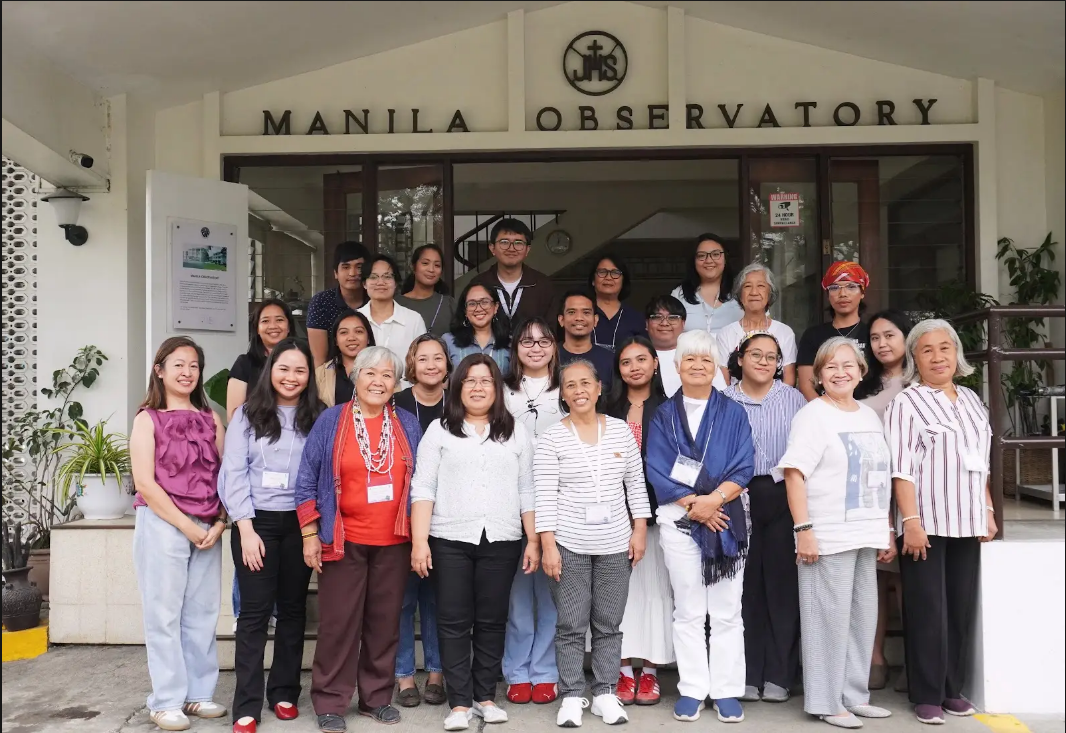
“Ang pagtatanggol sa kalikasan ay nangangahulugan din ng pagtatanggol sa karapatang pantao at pagtatanggol sa dignidad ng komunidad. Hindi namin ito magagawa kung kami lang, kayo ang nasa unahan ng laban” (The fight for the environment is also a fight for human rights and for the dignities of communities. We cannot do this by ourselves, you are at the frontlines of this battle), Christophe Bahuet, Resident Representative of the United Nations Development Programme (UNDP) Philippines conveyed to the women environmental human rights defenders at the Manila Observatory last February 18, 2026.
As part of the project entitled “Strengthening Women’s Civil Society and Women Environmental Human Rights Defenders’ Political Participation and Influence for a Just, Green Future Philippines,” UNDP and Klima Center of the Manila Observatory recently conducted the Co-Design Sessions from February 18-20 at the Heyden Hall at the Ateneo de Manila University.
This three-day activity brought together representatives from ten (10) partner women-led civil society organizations and eight (8) resource persons to collaboratively create training modules for Women Environmental Human Rights Defenders (WEHRDs). The objective was to develop learning materials that would strengthen their knowledge and skills in responding to the worsening forms of gender-based violence, threats, and risks faced as a result of their defense of land, environment, and human rights.
“Three-way learning,” a term coined by one participant, captured the spirit of the activity—participants learned from facilitators and experts, facilitators and experts learned from participants, and participants learned from each other. Spirited sharing and lively conversation characterized the co-design sessions, as the draft modules were refined with the help of resource persons from various organizations. Participants engaged in interactive lectures, simulation of workshop activities, and active feedback sessions to get a feel for how their communities will experience the upcoming Capacity Development Workshops. They shared key priorities, outlined objectives, and identified gaps in the draft modules that will be improved on for the capacity development workshops. CSO partners’ insights during this preview shaped the modules to meet their communities’ needs through a participatory, consultative process.
The three-day activity offered CSO representatives a preview of the workshops’ scope—from self-care techniques in the Mental Health & Well Being Module to a crash course on intersectionality in the Gender and Environmental Justice Module—highlighting the key skills and knowledge WEHRDs will develop.
Moving forward, the MO team, along with its partners, will engage in a virtual modules development session for the remaining four (4) modules that need to be co-designed, refined, and improved. The learnings and insights from these co-design sessions will inform the MO team and the resource persons as they further refine the training modules in preparation for the Capacity Development Workshops. These workshops complement the project’s other key components—particularly the development of digital monitoring tools and the facilitation of policy dialogues—to strengthen the capacity of Filipino women environmental human rights defenders and support their continued leadership in advancing environmental justice and a just, green future for the Philippines.###