
By Denmar Djasthine Garcia and Bianca Alenna Serrano
On June 22-23, 2026, the Klima Center of Manila Observatory, together with the Fastenaktion Philippine Country Program, held “Climate Justice amid the Energy Crisis and the Search for Accountability,” a two-day Capacity Building Workshop at the Institute of Social Order (ISO) in Ateneo de Manila University. The workshop was attended by Fastenaktion’s partner organizations representing grassroots and community-based organizations across the country.
Fastenaktion is a Swiss-based Catholic development organization that is dedicated to fighting hunger and poverty. Working alongside disadvantaged communities across Africa, Asia, and Latin America, the organization focuses on empowering people through sustainable, long-term, and community-centered solutions. In the Philippines, Fastenaktion works with a variety of organizations with the Manila Observatory as its international partner.
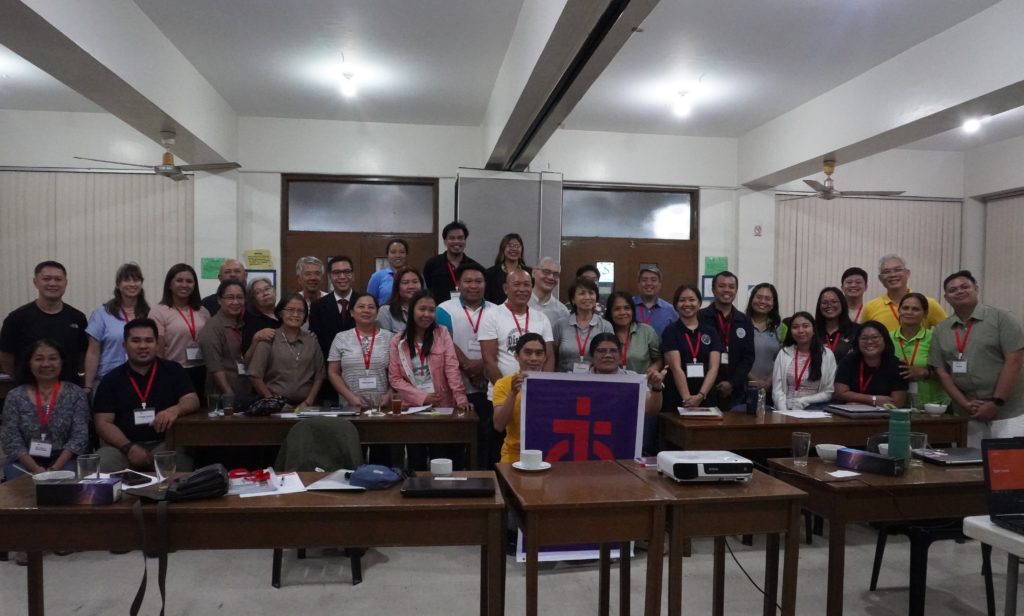
Building on the previous year’s discussions on Loss and Damage and Just Transition (see last year’s report here), this year’s workshop focused on enriching participants’ capacities to analyze the intersections of climate justice, Just Transition, and accountability while drawing from the lived realities of their own communities.
The first day of the workshop highlighted that climate justice begins with the voices of frontline communities. Beginning with the Center for Empowerment and Resource Development (CERD), who voiced the current situation of municipal fisherfolk in Northern Samar, tackling persistent issues of illegal fishing and encroachment into municipal waters. These problems are further compounded by the use of traditional fishing grounds for the development of offshore wind renewable energy projects, without sufficient protection measures put in place for marine ecosystems and fishing communities.
The Tribal Center for Development (TCD) then discussed the experiences of the Dumagat-Remontado Indigenous communities in Quezon Province, whose ancestral lands continue to be threatened by the Kaliwa Dam project and the proposed construction of wind energy facilities. TCD highlighted how development projects can also negatively impact ancestral domain rights, emphasizing that development should not come at the expense of Indigenous People’s rights but should safeguard ancestral lands while supporting community development plans.
Meanwhile, the Social Action Center of the Diocese of San Carlos (SAC San Carlos) highlighted the emerging challenges posed by large-scale solar farms, including the displacement of agrarian workers, loss of agricultural land, threats to food security, and human rights concerns affecting climate advocates.
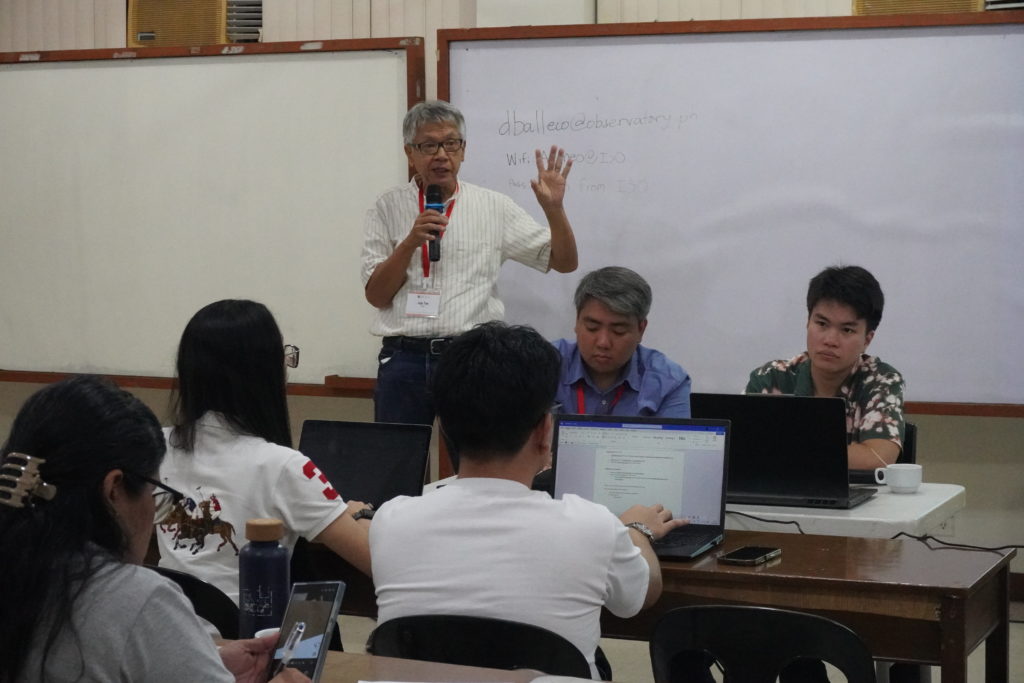
The community presentations were followed by a workshop, which gave participants the opportunity to work together and explore how Loss and Damage, Just Transition, Food Justice, and Climate Justice are linked in each of the cases under study. Participants shared suggestions for actions which focus on community organizing, fact-finding, stakeholder involvement, legal and paralegal services, policy advocacy, and improved collaboration among local governments, civil society organizations, faith-based organizations, and affected communities.
The afternoon session delved into the issue of community experiences into the national level, through talks on the energy crisis situation in the Philippines by experts. Atty. Noel M. Baga, a Senior Lecturer in the University of the Philippines, explained how the 2026 energy crisis in the Philippines showed the dependence of the nation on foreign energy resources, as well as the weaknesses in the Philippine energy sector. In his presentation, he stressed the importance of good governance and community participation in achieving a just transition, along with increased renewable energy. Complementing this discussion, Sonny Africa of IBON Foundation examined how the energy crisis is intertwined with economic inequality and market-driven energy policies, highlighting the fact that fuel costs are rising at the expense of the average Filipinos. He urged the need to put people above profits.
The second day shifted the discussion from the lived realities of energy injustice to the legal mechanisms available to communities seeking answers, bringing the participants into conversation with legal experts and climate activists working on climate accountability.
Atty. Stephanie Anne Hillario of Parabukas opened with a primer on the International Court of Justice Advisory Opinion on Climate Justice (ICJAO). She explained that while the ICJAO is not legally binding, the ruling carried significant political weight as it affirmed the duty of States to prevent significant environmental harm. According to the ICJAO, harm caused by a State may be an internationally wrongful act. This creates duties to cease the harm, guarantee non-repetition, and provide reparation. On the other hand, Jefferson Chua of Greenpeace Philippines followed with a session on domestic accountability tools, opening with the reminder that there is no such thing as a purely natural disaster. He walked through the Climate Accountability (CLIMA) Bill (House Bill 4420), built on three principles—polluter pays, precautionary principle, and State obligation to pursue reparations. He also flagged its weaknesses: some of the bill’s own advocates push market-based policies at the same time, and the Philippines still has no national decarbonization pathway to anchor against corporate targets.
The Odette case, as discussed by Greenpeace, marks a shift in climate litigation strategy, moving beyond broad calls for climate action towards an evidence-based attribution of harm to a single corporate actor. By examining a corporation’s documented historical knowledge of fossil fuel impacts and its efforts to obscure climate science and linking it to the deaths and damages of typhoon Odette, the case tests whether accountability in climate-related harms can be established with the same rigor as accountability for any other harmful conduct.
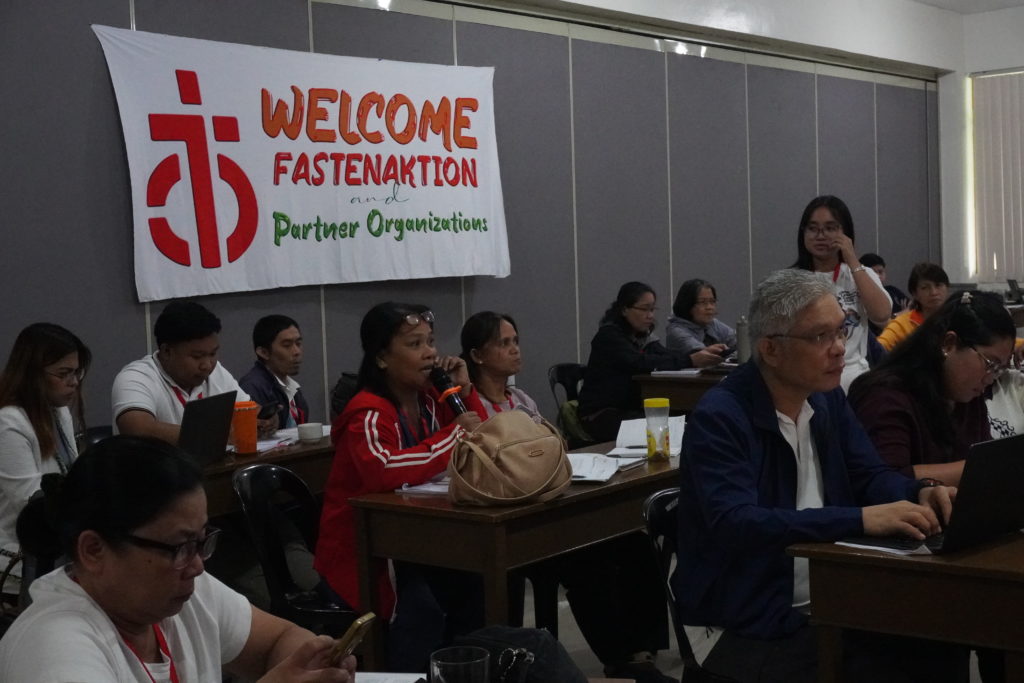
Discussions afterward turned to where these mechanisms still fall short. Participants raised the difficulty of quantifying gendered, non-economic harms like unpaid care work; the NGOs’ narrow climate-only scope, which leaves land-use issues like agricultural land conversion largely untouched; and the troubled track record of carbon market projects, which mostly reportedly fail to deliver real community benefit. Atty. Javvy Gamboa offered Manila Observatory’s support in bringing these sessions directly to partner communities, while Greenpeace shared that translating emissions data from global to local scale—rather than leading with jargon—had measurably deepened community engagement in the Odette campaign.
The day closed with a creative exercise built around one question: What does accountability mean for my community? The group led by TCD answered with a poem that showed a glimpse of the Dumagat-Remontado ritual of gratitude toward the environment, rooted in the idea that what is taken from nature must be shared. The CERD-led group presented a narrative on how offshore wind energy projects would touch individual residents’ lives, while the SAC–San Carlos group focused on the links between food security, gender inclusivity, and accountability. What struck across the three: genuine accountability means recognizing that all things have life, and that we, as humans, are accountable for all our actions.
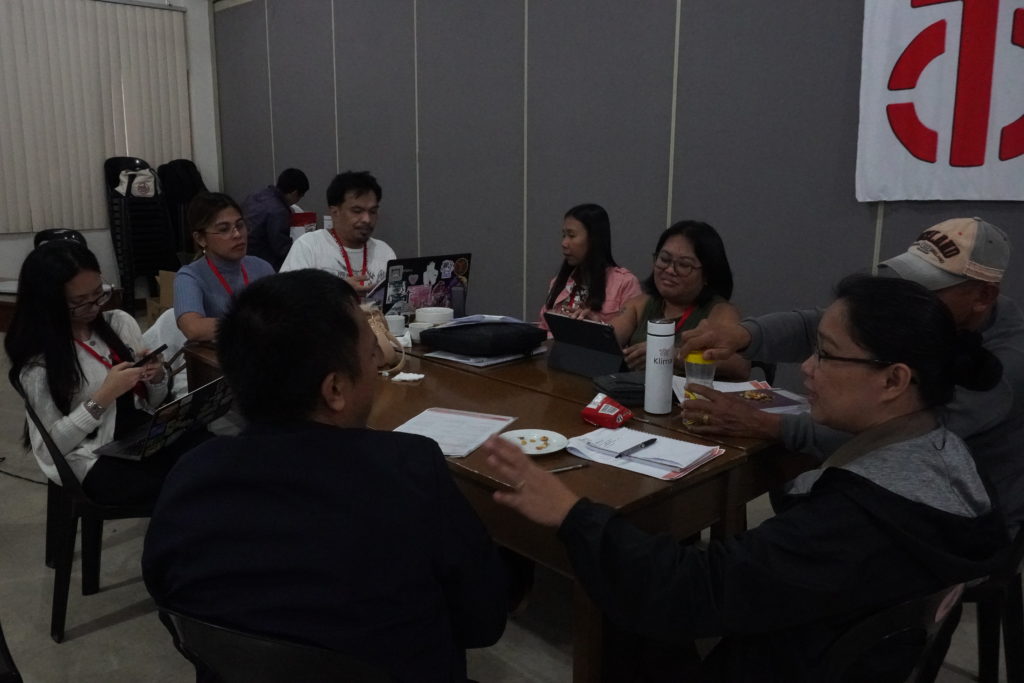
Across the two days, the participants of the workshop moved from naming the structural roots of their climate justice issues to confronting the accountability mechanisms—international and domestic, legal and community-based—that might eventually answer them. What emerged was a shared recognition that the tools exist, but remain out of reach without sustained organizing, structured support, and translation of the work at the community level. As one participant put it, resilience alone is not enough; the struggles of the people must also be recognized.
The workshop did not set out to provide final answers, but to plant the subtle seeds for what comes next: deepened documentation, continued organizing, and a search for justice that stays rooted in the people’s own culture and voice. For partners like CERD, TCD, and SAC–San Carlos, the work of translating these conversations into action back home is only just beginning—carried forward in solidarity with the communities, and with each other.