
By Amina Matavia
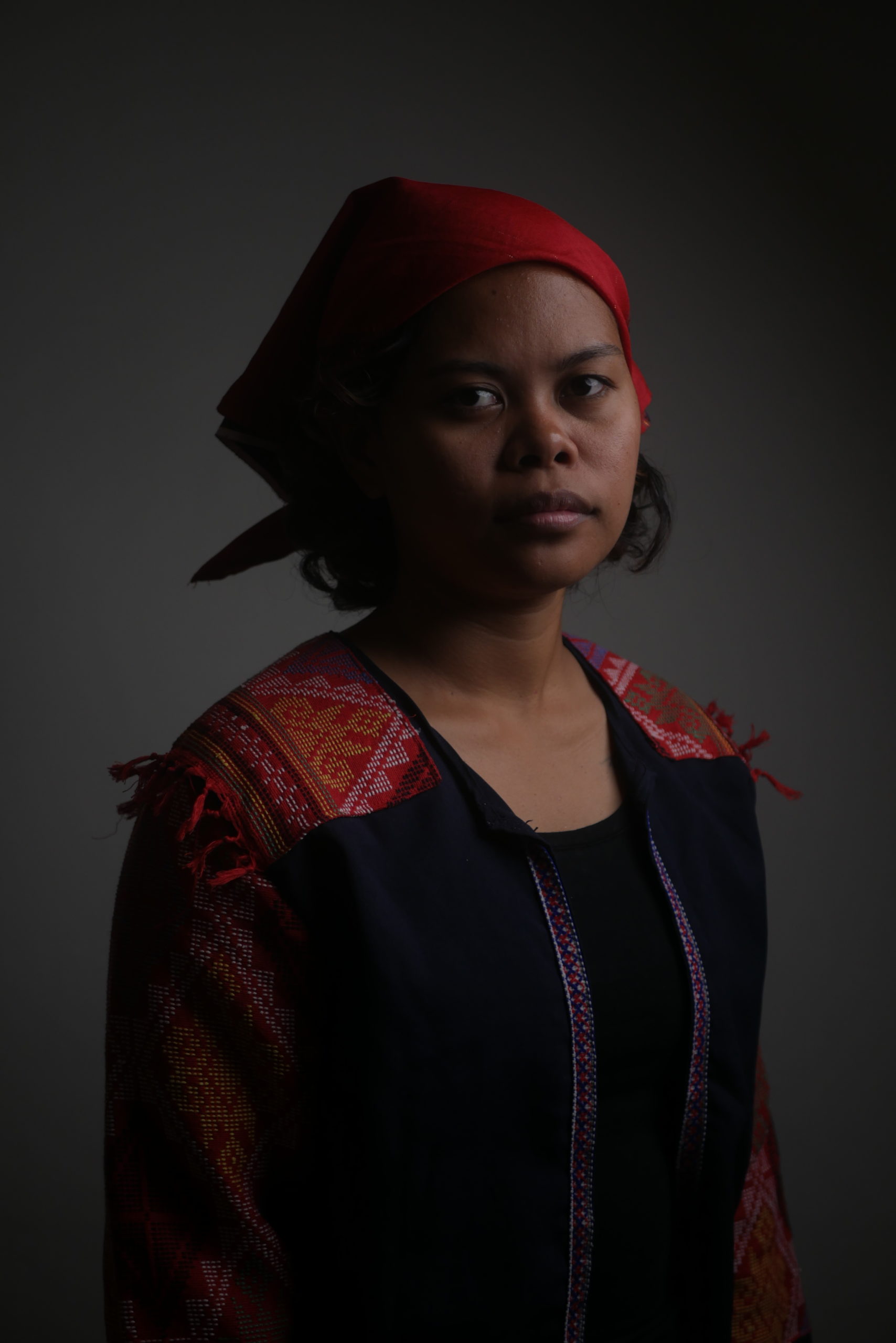
Impact Story # 2: Catherine Dalon, Sabokahan Unity of Lumad Women
Bright eyes and big smiles
Kat Dalon is a member of Sabokahan – Unity of Lumad Women, a community partner of the Women’s Studies and Resource Center – Southern Mindanao Region. Kat belongs to the Obo Manobo tribe from the mountains of North Cotabato in Mindanao.
Her bright eyes and big smile can sometimes mask the magnitude of all she’s experienced as an indigenous youth and environmental defender. Her boundless energy is reminiscent of a younger sister—bouncing from person to person, never running out of things to say or do. At the workshops in Bulacan, bored out of her mind from a whole morning of sessions, Kat proposes an icebreaker to the group. She stands at the front of the room and leads a Zumba dance to a budots remix of Hawak Mo Ang Beat, carrying the ease and confidence of someone often found at the center of the room, whether at protest rallies or forums. And yet, Kat carries with her a gravity moulded by the weight of her experiences at 22.
Her fight for land and identity
Just like any tribe, Kat comes from a family of farmers. Her parents grow corn in a small plot of land at the foot of the Pantaron mountain range. Back in the day, Kat recalls how harvest season yielded 300 sacks of corn for her family to sell. She recalls how they also used to have a small rice field, and her parents would sell rice along with their corn harvest. For Kat’s tribe, their land meant sustenance. Their land is their livelihood. And, as Manobos, their land is also heritage and identity. Their land is their life.
Nowadays, banana and rubber plantations flank all sides of their corn fields. There is a plantation to their north and plantations to their left and right—hectares upon hectares of monoculture agricultural land. Kat notes how, back in the day, rugged terrain with no developed roads meant difficulties in transporting their harvest, supplies, and day-to-day necessities from the nearest town. The presence of large plantations brought with it infrastructure—developed roads that ease the coming and going of people and produce. Progress that is meant to signal the development of marginalized communities.
And yet, Kat cannot help but notice the negative environmental effects brought about by these projects. The plantation depleted the water source for their small farm. When pesticides are sprayed on the bananas in the plantation, the wind carries these chemicals to their corn—medicine not meant for their crops, killing a significant portion of their harvest for the season. Despite the development in infrastructure, she has also seen a decline in their harvest. Fields that once yielded 300 sacks of corn now only produce 100. Infrastructure meant to bring economic mobility and relief to Kat’s community has endangered their livelihood. This is only one of the various infrastructure projects that are seemingly for the development of communities but, in reality, only benefit corporations and negatively impact those they are meant to help.
Kat also shares that a hydropower dam along the Pulangi River, one of the longest in the Philippines, threatens the lives of indigenous communities downstream of the river due to an increased risk of flooding during heavy rains.
Kat, at such a young age, experienced forced evacuation due to heavy military activities in their community. She had to leave her home and stay in Davao City for several months. Then, through Save Our Schools Network, she relocated to Metro Manila to study in UP Diliman. She was not able to go home for several years. She had gone through several losses of loved ones along the way. Her colleagues, volunteer teachers Chad Booc and Juraine Ngujo, both of whom were very close to her, were killed during fieldwork. Many of her classmates in the indigenous self-help school they have established were harassed, imprisoned, and threatened.
Because of all these issues, Kat grew up in a politically charged environment—development aggression, environmental degradation, land grabbing, and the militarization of her communities have led her to be politically active.
According to Kat, organizing and advocacy work is a necessity to protect herself and her community’s way of life. She joined Sabokahan – Unity of Lumad Women in order to help tribes in Southern Mindanao unite in a cause of protecting their land and rights. While she still cannot go home due to threats, she serves in other communities and tribes. She educates fellow indigenous women on building organizations and connecting them to other communities. She is also trying to establish advocacy groups among youth and students for the rights of indigenous communities.
Learnings with other WEHRDs
The workshops for this project are capacity-building initiatives for women environmental defenders like Kat to help bolster their political participation and empower them with skills integral to their advocacy. Kat brought her stories, experiences, and skills as a community organizer to the workshop—learning as much from her co-participants as they learned from her. Kat created mental health self-care plans, learned psychological first aid, developed fundraising ideas, and deepened her knowledge on environmental and human rights.
Kat shared that Sabokahan is currently collecting data to file a report with the Commission on Human Rights on instances of human rights violations against Lumad communities. Through the workshop, she sharpened her documentation skills, learning how to better document and address human rights violations through Minimum Information Checklists and referral pathways. Sabokahan is slowly streamlining their process for documenting violations, ensuring that important details are not lost to time or memory.
The session that left the biggest impression on Kat was the module on Mental Health and Well-Being. As an environmental defender, the compounding effects of the economic hardships, threats to her family, and human rights violations negatively impact her mental health. For Kat, the Mental Health and Well-Being module affirmed that community care is an integral part of one’s mental health. It taught her skills on how to care for her mental health and that of those around her. Through the Pagdadala session, where participants shared with peers the load they are carrying, she found unity in the collective struggle of the women in the room. She found strength in their stories. She built resilience in the community she’s found with other women defenders.
At the project’s National Dialogue event, Kat donned the traditional attire of the Manobo people and shared the stories of her people. The initial shakiness of her voice was quickly replaced with an unwavering conviction, as she fearlessly shared the injustices faced by her tribe back in North Cotabato. Putting her advocacy and campaigning tools to practice, she called for the heightened protection of indigenous peoples and for better social services for rural and marginalized communities.
Kat was never one to back down from the opportunity to speak truth to her tribe’s story—no matter the audience and no matter the risks. She wears her bravery and her compassion proudly, because there is no other way to be as a Lumad woman. She continues her work with Sabokahan, despite the challenges, because she believes in the strength of the movement around her and the resilience of the women who came before her. As a Lumad woman, the climate crisis is inescapable, and environmental injustice has been banging on the doors of her tribe for decades now. Kat answers this call with an unwavering resolve, love, and compassion for her people, armed with the skills she learned but still with the big smile and her bright eyes.##
The Strengthening Women’s Civil Society and Women Environmental Human Rights Defenders’ Political Participation and Influence for a Just, Green Future Philippines Project was made possible through generous contributions from the governments of Denmark, Luxembourg and the Republic of Korea, via the Funding Windows. As the United Nations Development Programme’s primary mechanism for flexible and pooled thematic funding, the Funding Windows enable UNDP to respond swiftly and comprehensively to needs and emerging challenges across the world.