
By Amina Matavia
Impact Story #1: Cleisteil Cimafranca, WRCV
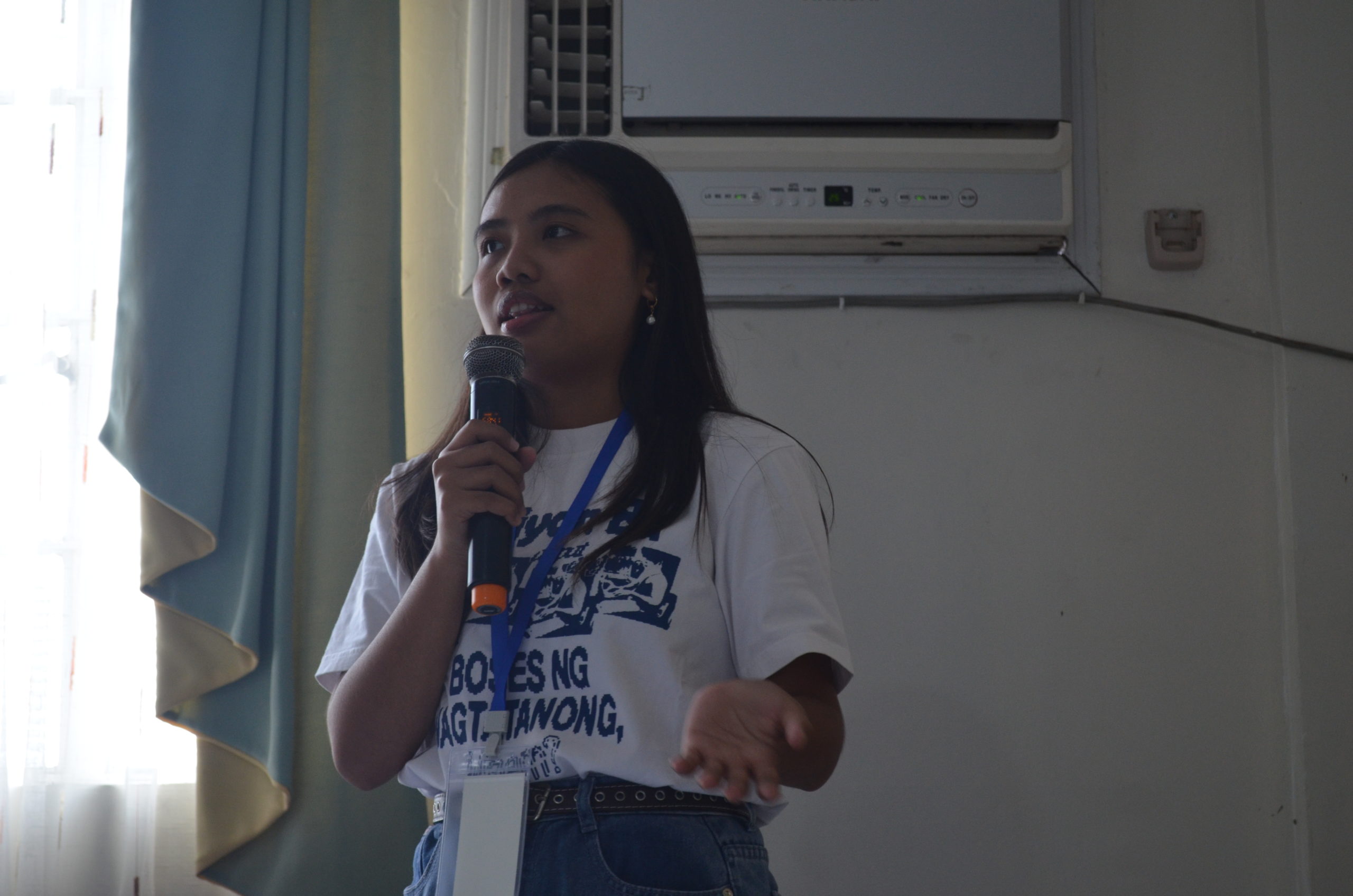
Cleisteil Cimafranca, 24 years old, is a young woman development worker from the urban poor communities of Cebu. She is currently working as Education & Training Officer for Women’s Resource Center-Visayas (WRCV), a Cebu-based organization serving grassroots women.
As one of the world’s most climate-vulnerable countries and one of the most dangerous for environmental defenders, women defenders in the Philippines operate at the center of this dual crisis: stewarding lands and communities while facing gender-based violence, red-tagging, demolitions, and judicial harassment. Cleisteil, or Cling, exists within this landscape.
As the eldest of the four siblings, she had to take the role of a parent when they were not around. In her household and in her community, she witnessed firsthand the various forms of domestic, economic, and political violence women experience. For her, gender-based violence and women’s struggles are not just concepts echoed in the halls of classrooms or board meetings; they are reality. Combating violence against women, whether that be physical, emotional, or economic, is a plight close to her heart.
Cling has been exposed to the struggles of various communities across Cebu as a student leader at the University of the Philippines. She watched families rebuild after Super Typhoon Odette, saw vendors fighting displacement at Carbon Market, and learned that these were not isolated hardships but symptoms of a societal crisis rooted in profit-driven “development” and inequality. Her aspirations as a development worker are fueled by the women who fought for justice, equality, and rights amidst the challenges.
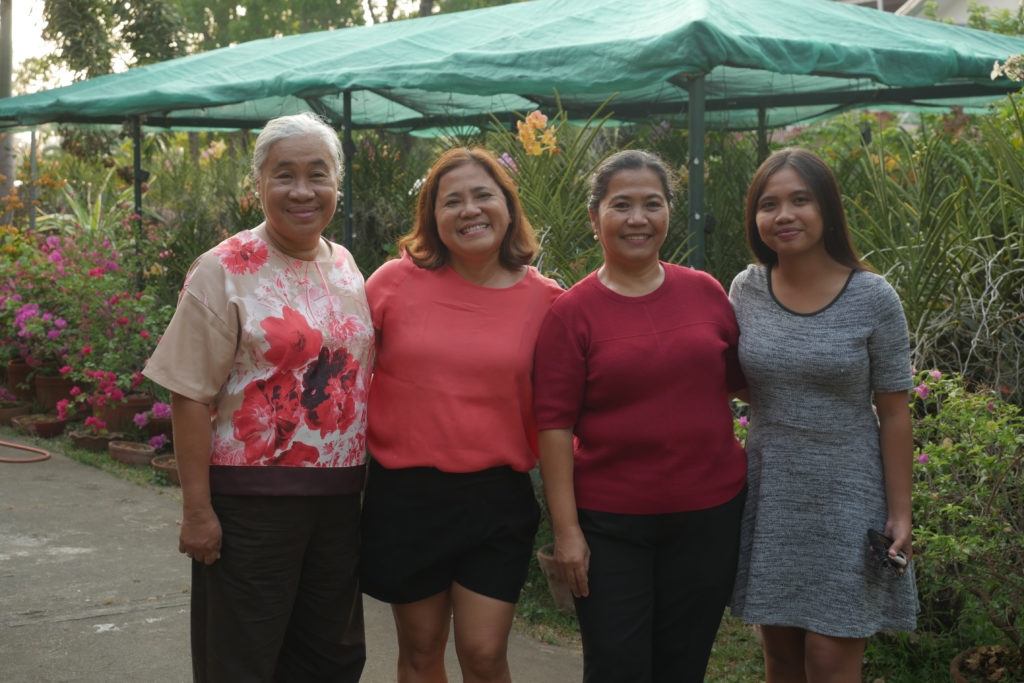
By the time she joined WRCV, Cling had developed both the tools of analysis and the attitude of humility required for this work. WRCV tapped her when the Manila Observatory and UNDP Philippines launched a capacity-building initiative for women environmental defenders. The project engaged Cling and her WRCV colleagues as co-designers. She contributed her expertise in community education, ensuring the training modules reflected the stories and needs of the communities WRCV serves: land grabs, reclamation schemes, and displacement disguised as “development.”
In April, Cling and her WRCV colleagues attended the 1st batch of Capacity Development Workshops in Bulacan, where they learned skills and frameworks necessary for strengthening their advocacy as WEHRDs. The training covered an array of topics—from climate science and environmental justice to resource mobilization and strategic decision-making. Cling and her colleagues enriched the conversations by sharing the pressing issues faced by Cebuanon women—namely, issues around reclamation, demolitions, and land use conversions that have led to environmental degradation and displacement of communities.
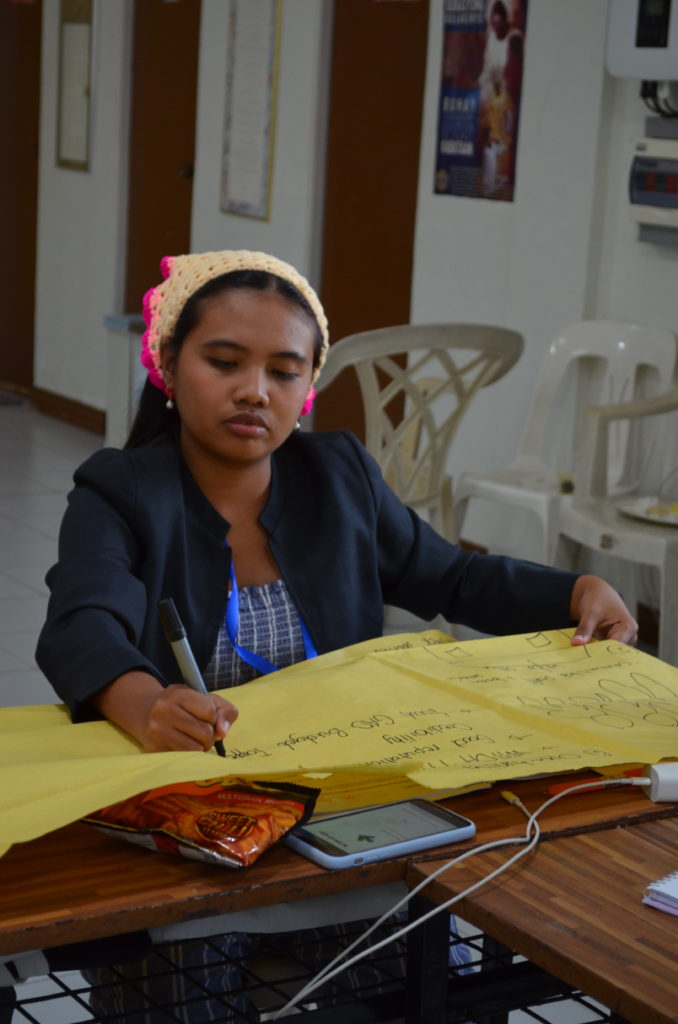
The learnings from the workshop mattered. The workshop’s modules, shaped by her input, became a template she now uses to build knowledge materials for WRCV that are grounded in both theory and contextualized for practice. On a personal level, Cling learned a lot about writing grant proposals—an important skill as a development worker. She shared that she successfully put these skills to practice when writing a grant proposal for a feminist participatory action research project aimed at training community members as researchers and documenters using a feminist and human rights-based approach. The grant was successfully granted to WRCV. More importantly, meeting and networking with other women defenders from across the Philippines has deepened her appreciation for development work.
Back in Cebu, WRCV is now supporting the formation of EcoSisters of Minglanilla, a women-led organization explicitly designed to channel women’s political power towards community and environmental protection. Using the UNDP modules, WRCV is equipping EcoSisters members with the organizing tools, campaigning strategies, and theoretical understanding of environmental and gender justice.
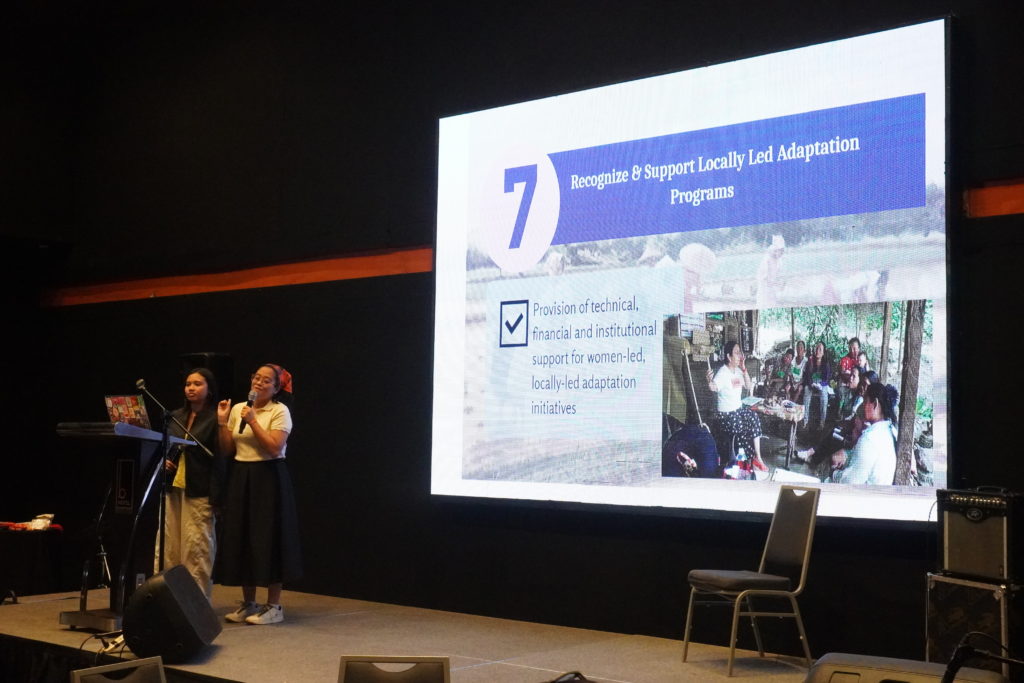
Three months after the workshop, Cling represented the women defenders at the multi-stakeholder dialogue, presenting policy recommendations the network had collectively drafted. The voice of the youth, Cling now serves as a voice in the national advocacy space for Cebu’s grassroots women, translating grassroots data into policy and action, and ensuring that the next generation of women defenders in her community inherits both tools and strength to influence political decisions.###
The Strengthening Women’s Civil Society and Women Environmental Human Rights Defenders’ Political Participation and Influence for a Just, Green Future Philippines Project was made possible through generous contributions from the governments of Denmark, Luxembourg and the Republic of Korea, via the Funding Windows. As the United Nations Development Programme’s primary mechanism for flexible and pooled thematic funding, the Funding Windows enable UNDP to respond swiftly and comprehensively to needs and emerging challenges across the world.