
By Zenn Marie Cainglet, Melliza T. Cruz, Ophel Eliza Rabaja, Maria Obiminda Cambaliza, James Bernard Simpas, Fr. Jose Ramon Villarin, SJ, and Fr. Daniel McNamara, SJ
Lighting fireworks is one of the festive Filipino traditions in welcoming the New Year. As the clock strikes midnight on New Year’s Eve, the sky is filled with colorful fireworks. However, within minutes, the luminous fireworks give way to a dense cloud of smoke that quickly saturates the air, forming a thick haze of fine particles. That thick haze is more than just smoke—it contains toxic chemicals that pose immediate risks to respiratory and cardiovascular health (World Health Organization; Lorenzo et al., 2021). While many people are aware of firework-related injuries, how much do they know about the air pollution it creates? Is our tradition worth the air we breathe?
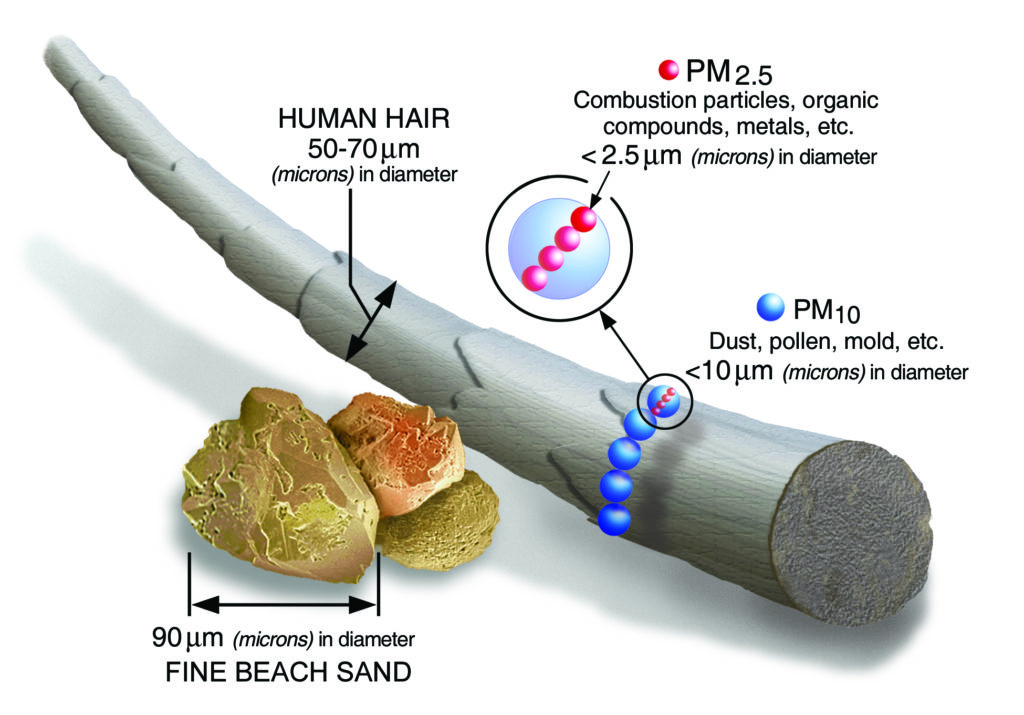
To understand air pollution and to grasp the scale of the problem, we must focus on the tiny particles that defy the naked eye. PM2.5, which stands for particulate matter with a diameter of 2.5 micrometers or less, is about 20-30 times smaller than the diameter of a single strand of human hair (Figure 2, US EPA, 2025). Since it is incredibly small, these particles can penetrate deep into our lungs and even enter our bloodstream, posing a serious threat to our health.
This annual report on air pollution during the New Year celebrations was made possible through the long-standing dedication of the Manila Observatory, an institution that has taken the vital initiative to monitor our air quality for over two decades. By providing more than 20 years of PM2.5 data, the institution offers the essential long-term perspective needed to understand how peak events, like New Year celebrations, affect our region’s air quality.
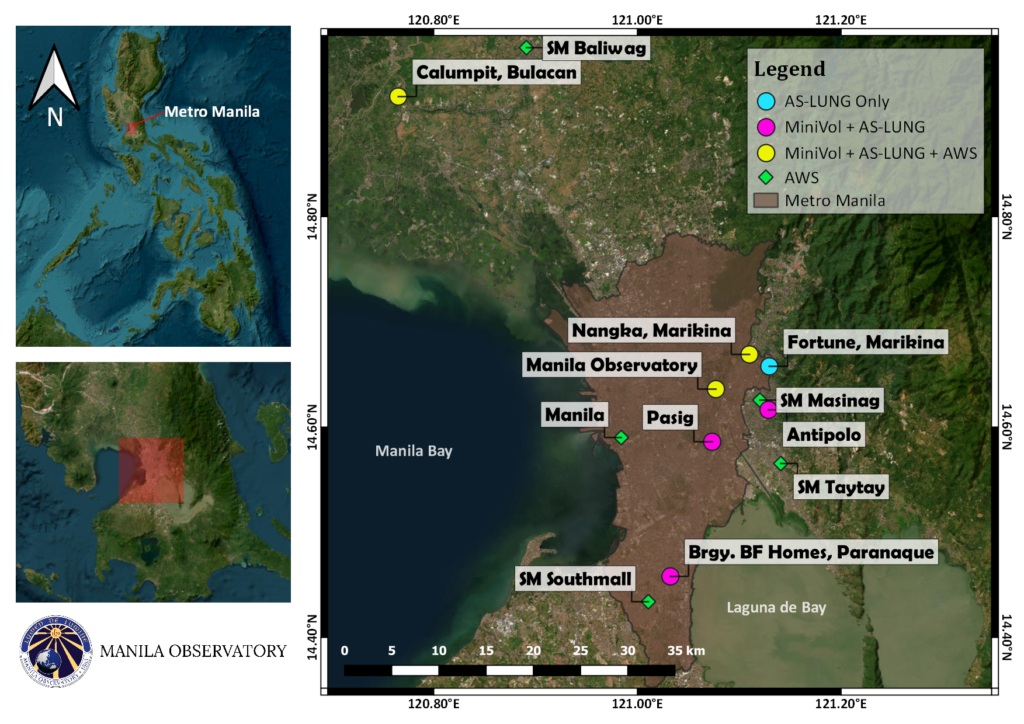
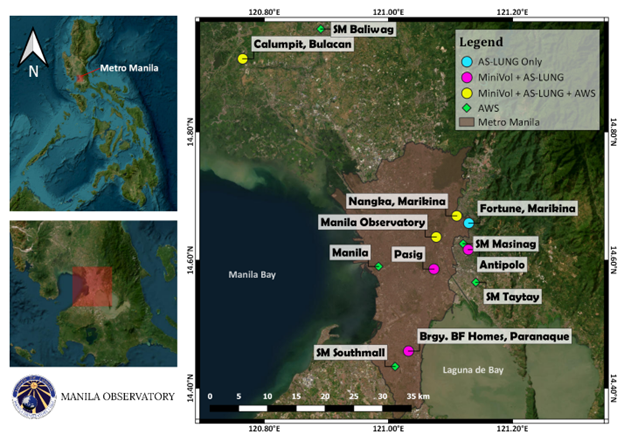
Each year, we closely observe PM2.5 levels during the New Year celebrations at various locations in Metro Manila (Figure 3). This year, our efforts were focused on seven monitoring sites: (1) Manila Observatory, Quezon City; (2) Nangka, Marikina City; (3) Fortune, Marikina City; (4) BF Homes, Parañaque; (5) Kaimito, Pasig; (6) Antipolo; and (7) Calumpit, Bulacan.
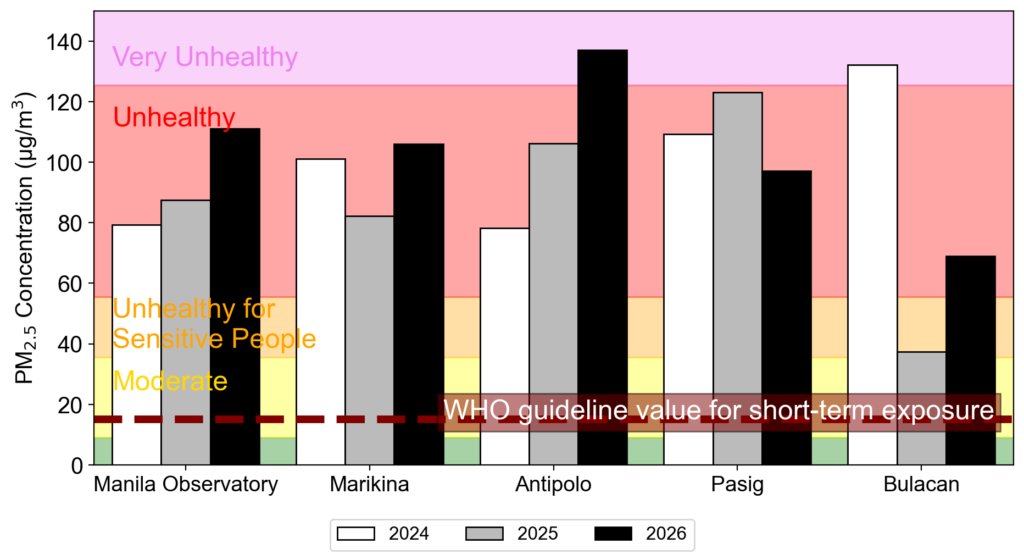
The 24-hour PM2.5 concentrations are seven times higher than the WHO daily guideline value of 15 µg/m3.
To collect the 24-hour PM2.5 samples during the 2026 New Year’s celebrations, our team utilized MiniVol Tactical Air Samplers (TAS). These portable, battery-operated units were strategically deployed in five sites, as shown in Figure 3, to measure from midday on New Year’s Eve to midday on New Year’s Day.
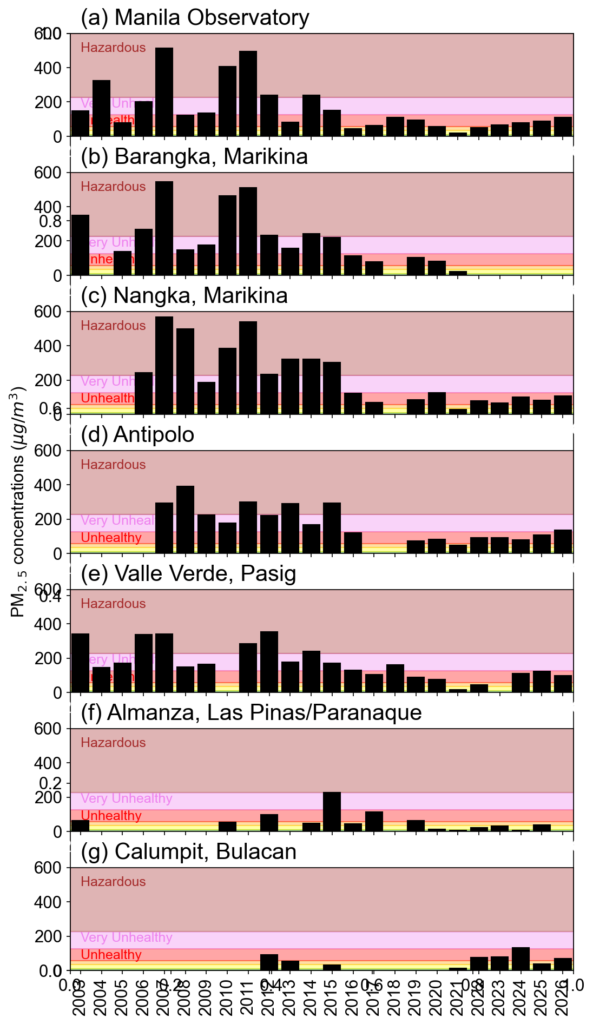
As observed in Figure 4, the significant long-term decrease in peak pollution can be largely attributed to the issuance of DILG Memorandum Circular No. 2016-176 and Executive Order No. 28. From 2016 onwards, there has been a visible shift in PM2.5 levels from Hazardous to Unhealthy, aligning with stricter national regulations and local firecracker bans. In the context of the Air Quality Index (AQI), Hazardous is the highest and most dangerous category, representing air quality so poor that it is considered a public health emergency (US EPA, 2023). While we observe an all-time low in PM2.5 levels during the 2021 New Year celebrations due to pandemic restrictions, a “rebound effect” has emerged. From 2022 to 2026, the data from the Manila Observatory site clearly show an increasing trend, suggesting a gradual return to pre-pandemic pollution patterns.
Despite the existing ban on firecrackers, data show that the 24-hour average PM2.5 concentrations still surged, increasing by 25% to 60% compared to last year’s levels (Figure 1). The average PM2.5 concentration across all five filter-based monitoring sites reached 104 µg/m3, which is seven times higher than the World Health Organization’s daily safety guideline value of 15 µg/m3.
The areas in and around the Manila Observatory (111 µg/m3), Marikina (106 µg/m3), Pasig (97 µg/m3), and Calumpit (69 µg/m3) sites exhibited an unhealthy AQI category. This category indicates that the air pollution levels are elevated enough to potentially affect the general population, whereas individuals in sensitive groups (e.g., children and the elderly) and those with pre-existing lung and heart conditions may experience more severe consequences. Notably, the Antipolo site (137 µg/m3) exhibited a very unhealthy AQI category, which denotes a “Health Alert” level. This category indicates a heightened risk of respiratory and cardiovascular effects across the entire population. Consequently, to mitigate serious health impacts, all individuals should refrain from extended outdoor activities.
In the early 2000s, many monitoring sites recorded PM2.5 concentrations that corresponded to hazardous AQI levels during the New Year period. In contrast, between 2020 and 2026, the highest PM2.5 concentrations have generally corresponded to unhealthy to very unhealthy AQI categories. While the PM2.5 concentrations have decreased in recent years, the levels are still worrisome given their potential health impacts.
Space and time variations in PM2.5 levels were observed across Metro Manila, with AQI levels ranging from Unhealthy to Hazardous.
As a collaborative, multi-institutional effort, the Breathe Metro Manila initiative operates a network of air quality sensors within the metropolitan region. Data from this network recorded a significant and sudden spike in PM2.5 levels at 12:00 AM, coinciding with the lighting of fireworks. These concentrations were over 350 µg/m3 after midnight and persisted for at least 12 hours. These PM levels fall within the Hazardous AQI category and are particularly alarming, as these levels are more than 23 times greater than the WHO’s daily safety guideline value of 15 µg/m3.
The air quality monitoring sites around Metro Manila provided a spatial distribution of the PM2.5 levels in the metropolis. Figure 5 shows how pollution varies temporally and spatially throughout the region. The hourly spatial distribution of PM2.5 concentrations across Metro Manila during the New Year celebrations shows a pronounced temporal pattern associated with fireworks activity. During the afternoon until late evening of December 31 (12:00 to 23:00), most monitoring sites recorded PM2.5 levels within Good to Moderate AQI categories, reflecting typical background PM2.5 levels. However, around midnight, northern and eastern sites such as Monumento, Ateneo, Manila Observatory, Ateneo School of Medicine and Public Health (ASMPH) in Ortigas, and Shaw Boulevard experienced a marked increase in PM2.5 concentrations, reaching Unhealthy AQI levels. It is important to note that these 12-hour AQI averages account for the early onset of pollution, capturing the intensification of PM2.5 levels before midnight. This confirms that firework-related activities began several minutes prior to the peak celebration at midnight.
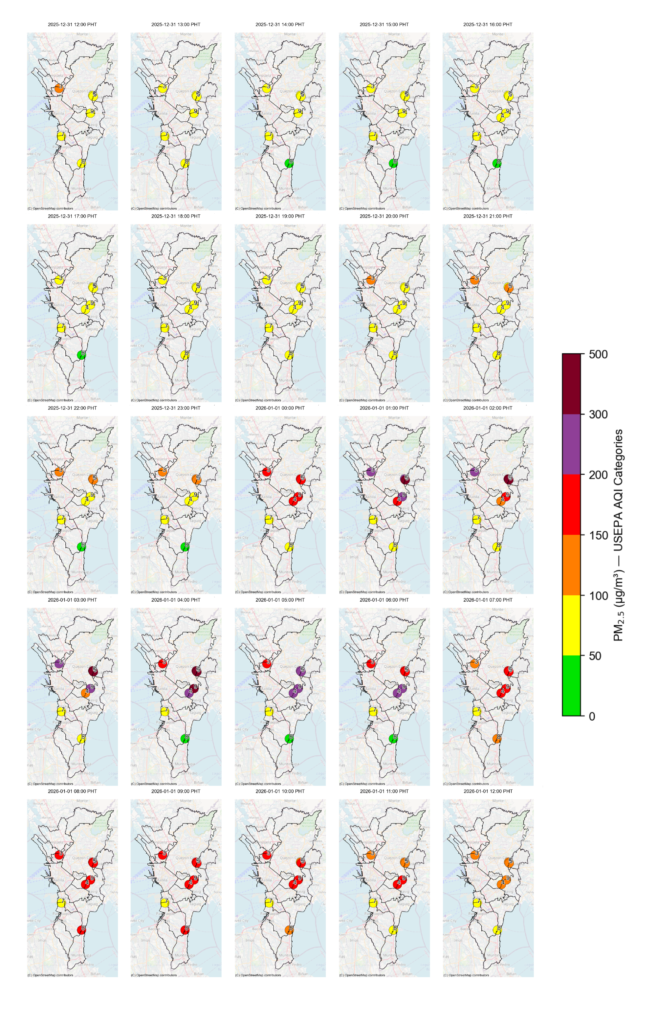
The most significant deterioration in air quality occurred between midnight and 6 in the morning on New Year’s Day, when multiple sites showed Unhealthy to Hazardous AQI levels. This sharp increase in PM2.5 concentrations coincides with the widespread use of fireworks in Metro Manila and nearby cities. After the recorded spike, most of the monitoring sites persisted in the Unhealthy Category for 5 hours (07:00 to 11:00), which suggests that air pollution from the fireworks remained prevalent long after the display concluded.
Spatial variations in peak concentrations were also observed, with some monitoring sites experiencing more intense air pollution spikes than others, likely reflecting differences in local emission intensity of the fireworks, topographical formations, and meteorological influences.
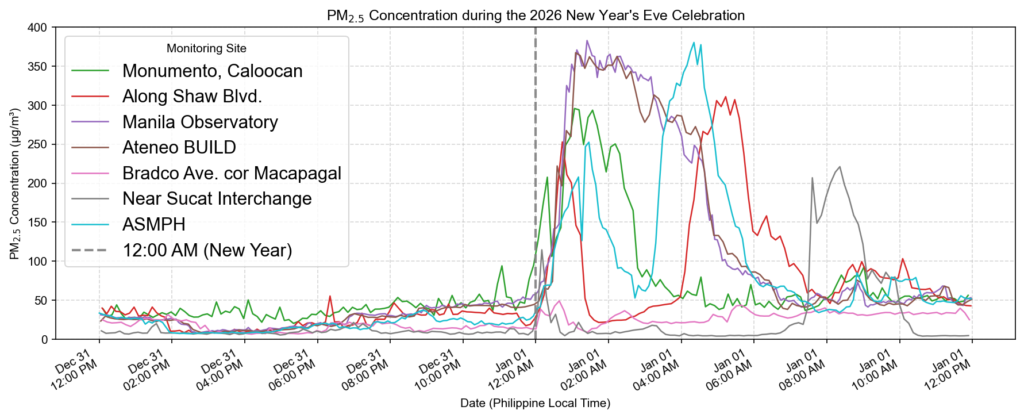
Other monitoring sites, such as ASMPH in Ortigas and Shaw Boulevard, recorded a bimodal peak in PM2.5 levels, indicating two distinct waves of air pollution. The first distinct peak can be attributed to a local firework display that occurred at midnight. The second peak, which occurred between 4:00 AM and 8:00 AM, suggests the presence of advected air pollution. This phenomenon occurs when smoke does not settle locally but instead travels to nearby areas, in this case, drifting down from northern Metro Manila to the southern monitoring sites.
AS-LUNG recorded an indoor PM2.5 level spike similar to outdoor levels.
In addition to the 24-hour filter-based monitoring, low-cost, real-time PM2.5 sensors, called AS-LUNG (Lung et al., 2020), were also deployed. These sensors detected a sudden spike at 12:00 AM, consistent with the readings from the Clarity sensors. The Pasig site exhibited a notable bimodal PM2.5 spike, similar to those recorded at the ASMPH in Ortigas and Shaw Boulevard, indicating that the pollutants were advected southward. Moreover, the Parañaque site experienced a delayed spike in the morning, particularly at around 8:00 AM, which may also be associated with advected air pollution.
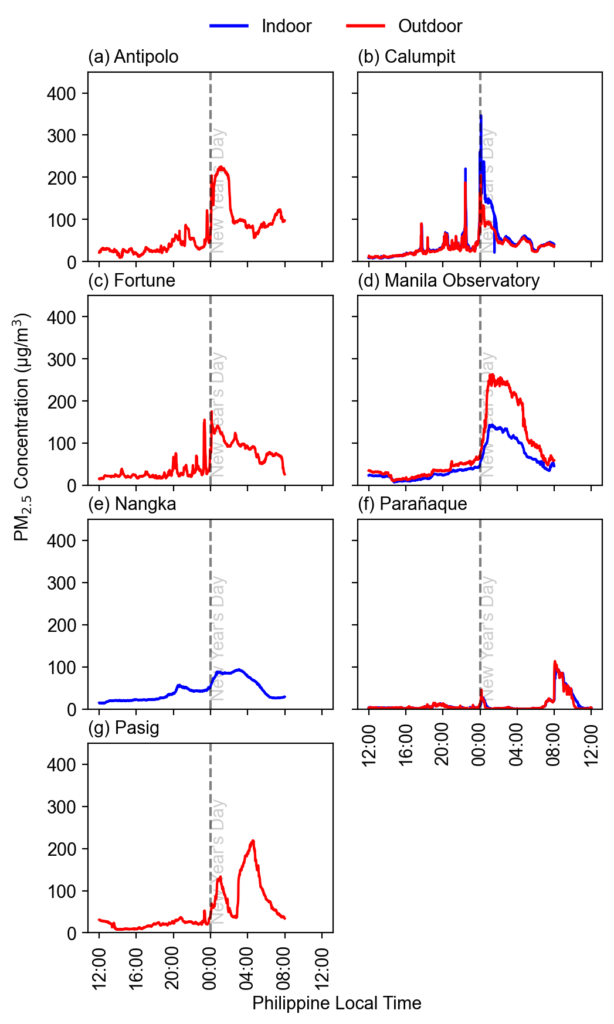
Figure 7 reveals that indoor environments during the New Year celebrations are significantly impacted by outdoor firework emissions. While indoor levels also increase in response to the outdoor peak, the increase is generally lower in magnitude and delayed. Indoor lag effects in Calumpit, Manila Observatory, and Parañaque were observed, where PM2.5 levels remain trapped indoors after outdoor concentrations begin to subside. Furthermore, these observations reveal that it is still important to be cautious even in indoor environments. The recorded indoor PM2.5 levels confirm that indoor spaces provide only partial protection during the New Year celebrations.
Low Wind Speeds Prevented the Dispersion of Peak PM2.5 Concentrations
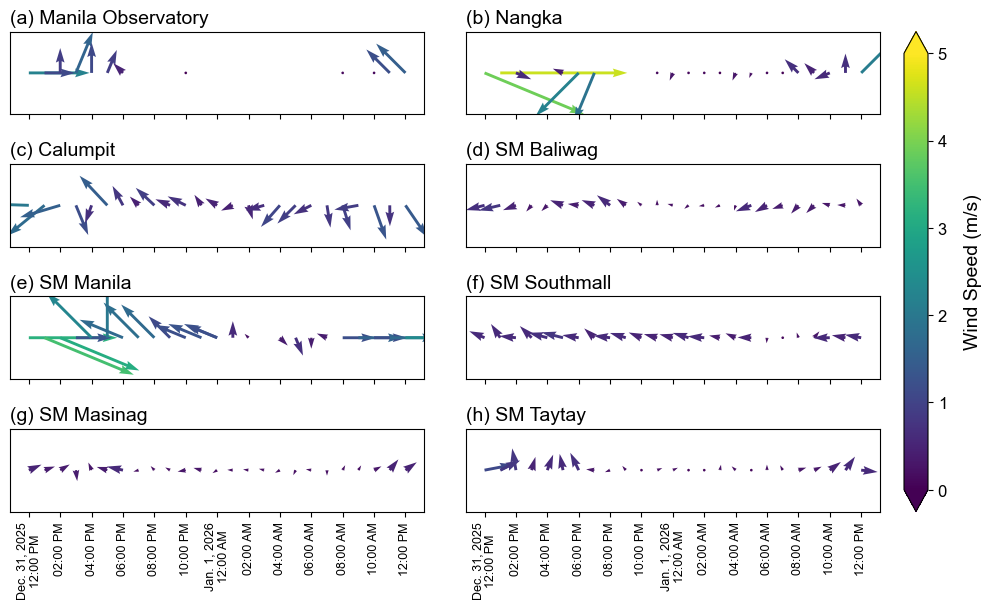
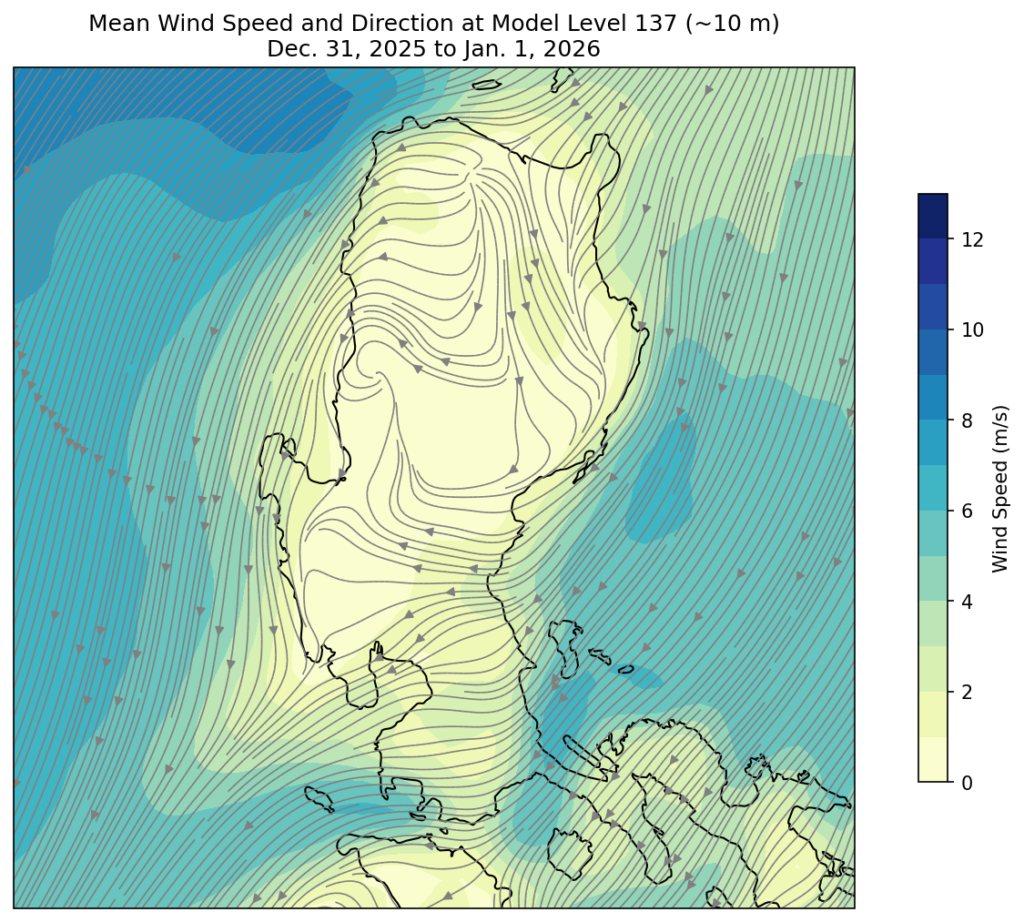
The low wind speeds recorded by the automated weather stations around Metro Manila contributed to the increased PM2.5 concentrations during the 2026 New Year’s celebration (Figure 8). Generally, the Philippines experienced northeasterly winds, also known as Amihan, with relatively low wind speeds between 1 and 4 m/s during the celebrations (Figure 9). The wind direction remained consistent throughout the sampling in the Greater Manila Area. There was no precipitation observed during this period, which could have helped to scavenge or remove fine particles in the atmosphere and reduce its concentrations.
Conclusion
The observed data from the 2026 New Year’s celebration in Metro Manila highlight that, despite regulatory efforts and some long-term progress, air quality during this annual event continues to pose a significant public health risk. PM2.5 concentrations remain well above World Health Organization guidelines, with spikes that threaten both sensitive groups and the general population. The persistence and resurgence of unhealthy air quality, amplified by meteorological conditions and widespread fireworks use, show that further action is needed. Continued monitoring, stricter enforcement of firecracker bans, community education, and the exploration of safer celebratory alternatives are essential to improving air quality and protecting public health during future New Year festivities.
References
- Clarity Movement Co. (2025). Breathe Metro Manila is working to confront the air pollution crisis in Manila. https://www.clarity.io/blog/breathe-metro-manila-pushes-for-metro-wide-air-quality-monitoring-using-real-time-data.
- Casucian, J. (2025). LIST: Metro Manila LGUs with ordinances regulating or banning firecrackers. GMA News Online. Retrieved from: https://www.gmanetwork.com/news/topstories/nation/971182/list-metro-manila-lgus-with-ordinances-regulating-or-banning-firecrackers/story/.
- Department of the Interior and Local Government. (2016). Rules and Regulations on the Sale, Manufacture, Distribution, and Use of Firecrackers and Other Pyrotechnic Devices. Retrieved from: https://www.dilg.gov.ph/PDF_File/issuances/memo_circulars/dilg-memocircular-20161214_88afeba505.pdf.
- Executive Order No. 28. (2017). Retrieved from: https://lawphil.net/executive/execord/eo2017/eo_28_2017.html#:~:text=It%20is%20allowed%20by%20the,Implementing%20Rules.
- Lorenzo, G. R., Bañaga, P. A., Cambaliza, M. O., Cruz, M. T., AzadiAghdam, M., Arellano, A., Betito, G., Braun, R., Corral, A. F., Dadashazar, H., Edwards, E.-L., Eloranta, E., Holz, R., Leung, G., Ma, L., MacDonald, A. B., Reid, J. S., Simpas, J. B., Stahl, C., Visaga, S. M., and Sorooshian, A.: Measurement report: Firework impacts on air quality in Metro Manila, Philippines, during the 2019 New Year revelry, Atmos. Chem. Phys., 21, 6155–6173, https://doi.org/10.5194/acp-21-6155-2021, 2021.
- Lung, SC.C., Chen, N., Hwang, JS. et al. Panel study using novel sensing devices to assess associations of PM2.5 with heart rate variability and exposure sources. J Expo Sci Environ Epidemiol 30, 937–948 (2020). https://doi.org/10.1038/s41370-020-0254-y.
- U.S. Environmental Protection Agency. (2023). Air Quality Index (AQI) basics. https://www.airnow.gov/aqi/aqi-basics/.
- U.S. Environmental Protection Agency. Particulate Matter (PM) Basics (2025). Retrieved from: https://www.epa.gov/pm-pollution/particulate-matter-pm-basics#PM.
- World Health Organization – Air Quality, Energy and Health (AQE). (2021). WHO global air quality guidelines: particulate matter (PM2.5 and PM10), ozone, nitrogen dioxide, sulfur dioxide and carbon monoxide. Retrieved from: https://www.who.int/publications/i/item/9789240034228.